
Biofilms — MCQs

On this page
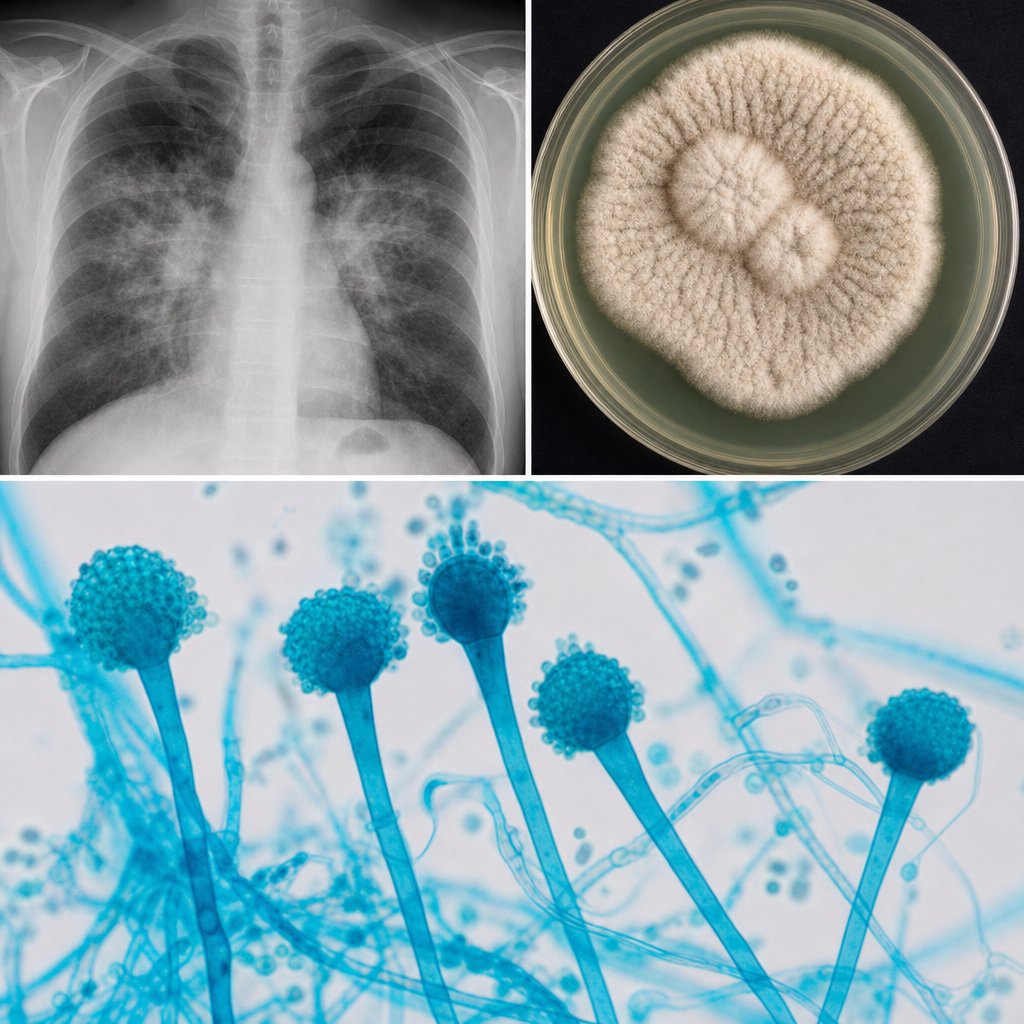
A 34-year-old man presents to the emergency department with a 3-day history of high fever, headache, and a productive cough. He recently returned from a construction project near the Ohio River Valley. Chest X-ray shows hilar lymphadenopathy and patchy infiltrates. A bronchoalveolar lavage specimen is sent to the laboratory. A methenamine silver stain of the BAL specimen identifies the causative organism, and culture later grows mold with tuberculate macroconidia.
A hospital implements silver-coated central venous catheters to reduce catheter-related bloodstream infections. Initial results show 60% reduction in infections at 1 week, but this benefit decreases to 20% reduction by 4 weeks. Electron microscopy of explanted catheters shows biofilm formation with embedded bacteria despite the silver coating. What mechanism best explains the loss of antimicrobial efficacy over time?
A 28-year-old woman with cystic fibrosis undergoes lung transplantation. Pre-transplant sputum cultures show mucoid Pseudomonas aeruginosa. Post-transplant, she receives immunosuppression and antibiotic prophylaxis. Six months later, she develops pneumonia, and cultures grow non-mucoid P. aeruginosa with identical genetic fingerprint to pre-transplant isolates. What evolutionary adaptation most likely explains this phenotypic reversion?
A clinical trial evaluates a new combination therapy for prosthetic joint infections: standard antibiotics plus an agent that degrades extracellular DNA (DNase). The DNase group shows 40% better cure rates without device removal compared to antibiotics alone. What is the most likely mechanism by which extracellular DNA contributes to biofilm antibiotic resistance?
A 60-year-old man with bronchiectasis has chronic Pseudomonas aeruginosa infection. Sequential isolates over 2 years show increasing minimum inhibitory concentrations (MICs) to tobramycin (from 2 to 64 μg/mL), yet no resistance genes are detected. Biofilm studies show bacteria in the biofilm tolerate 100x higher antibiotic concentrations than planktonic cells. Analysis reveals increased expression of ndvB gene. What mechanism best explains this adaptive resistance?
Practice by Chapter
Biofilm formation stages
Practice Questions
Extracellular polymeric substances
Practice Questions
Quorum sensing in biofilms
Practice Questions
Biofilm-associated antimicrobial resistance
Practice Questions
Biofilms in device-related infections
Practice Questions
Biofilms in chronic infections
Practice Questions
Biofilms in endocarditis
Practice Questions
Biofilms in cystic fibrosis
Practice Questions
Biofilms in otitis media and sinusitis
Practice Questions
Detection methods for biofilms
Practice Questions
Biofilm disruption strategies
Practice Questions
Novel anti-biofilm therapies
Practice Questions
Prevention of biofilm formation
Practice Questions
Want unlimited practice?
Get full access to all questions, explanations, and performance tracking.
Scan to download app