
Pediatric Urology Basics — MCQs

A neonate presenting with ascites is diagnosed with urinary ascites. What is the most common cause?
Which of the following is NOT a feature of hypospadias?
Which of the following is NOT a feature of hypospadias?
A 3-year-old child presents to the OPD with a history of recurrent urinary tract infections, poor urinary stream, and difficulty voiding. The radiological image is shown below. What is the most appropriate management?
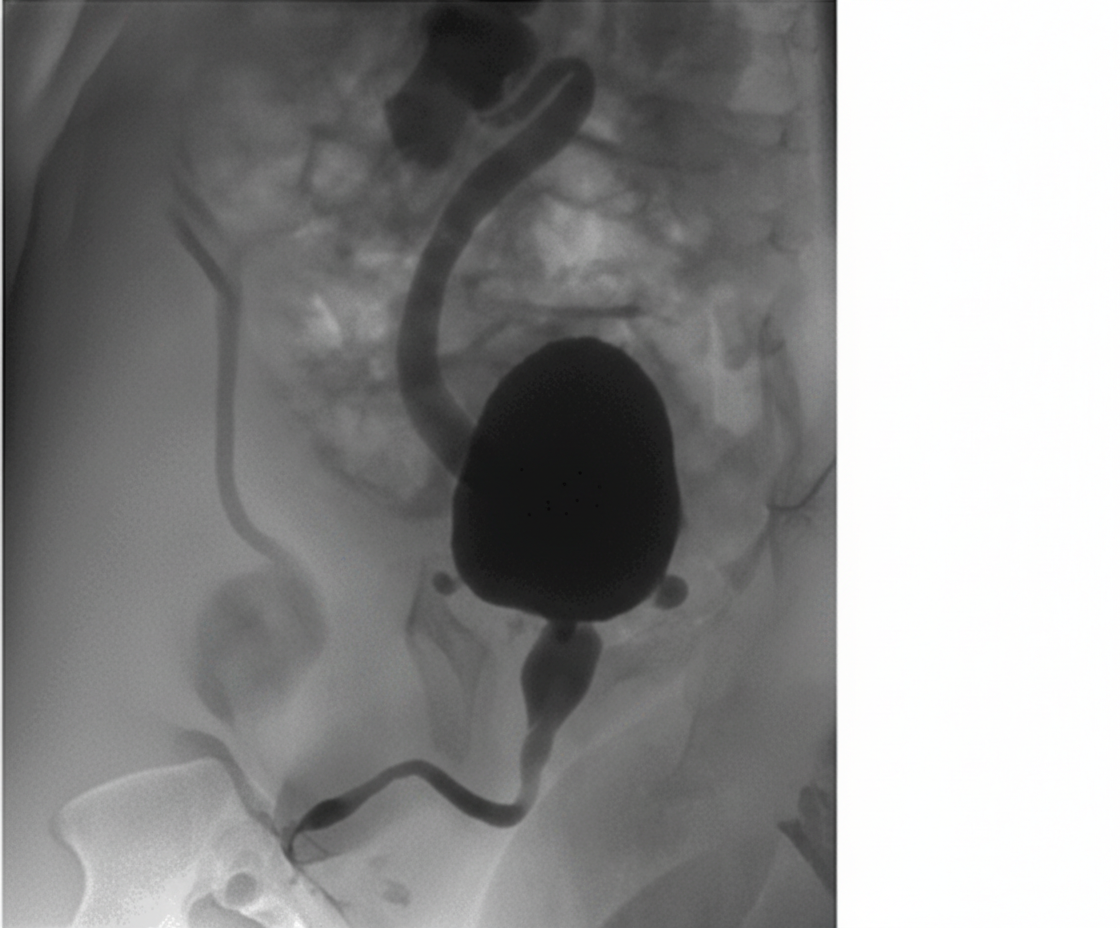
A one-year-old male child presented with a poor urinary stream since birth. The initial investigation of choice for evaluation is:
Most common cause of urinary obstruction in a male infant is -
A 4-year-old child was brought to the hospital with right impalpable testis. During diagnostic laparoscopy for undescended testis, there are blind testicular vessels. What should be done next?
When do we have to start antibiotics to prevent post-operative infection?
Assertion (A): In a patient with scrotal swelling, examination of the superficial inguinal lymph nodes should always be performed. Reason (R): Most lymphatic drainage from scrotal skin goes to the superficial inguinal lymph nodes. Choose the correct option:
A 40-year-old female with progressive left flank pain, no mass or fever. What is the next best step?
Want unlimited practice?
Get full access to all questions, explanations, and performance tracking.
Scan to download app